| Notes |
From - The Front Page 100 Years of Port Dover News
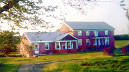
Industry, Meeting Place, Concert and Lodge Hall and Wartime Barracks
by Raymond C. Dearle
September 16, 1960
My earliest recollection of this building goes back to 1894, when I went to live with my grandparents, in Port Dover. I was then four years old. Obviously what I know of its history is what was told to me by my Grandfather and others.
He was Thomas Leader Gillies, known to most of the villagers as "Tommy". His career was a colourful one. At a very early age, prior to his connection with this building, he joined the "gold rush" of the early 1850s to Australia.
"Rush" is hardly the word to describe the event; as he went by stagecoach and sailing vessel to England, then by another sailing vessel to Australia....a voyage of several months, including as it did, a detour around the Cape of Good Hope; the Suez Canal being then non-existing.
On his return he sailed east from Australia, rounding Cape Horn, and all the way up the eastern coast of the Americas. Altogether, going and coming, he was nearly a year at sea.
Built Wagon Factory:
After his return from Australia, he joined in a partnership with another man whose name I have forgotten, to erect a building and to operate a wagon factory on the first floor.
The building was of very stout construction. I well remember the hand-hewn beams and supporting posts. The main overhead beam was about 18 inches square and the others only slightly smaller.
When I was a boy, the wagon business had vanished but I recall large wooden pulleys and an iron drive shaft still suspended from the ceiling.
The motive power was a horse on a treadmill, and I have a feeling that when I was a very small boy I saw the treadmill in operation, but I think I must be mistaken.
There were still instruments of the wagon-building trade, lying in boxes, gathering dust, which fascinated me in my early years.
Blacksmith Shop:
In addition to this main building, there was a blacksmith shop at the edge of a small creek which ran through the back of the property.
It was later used as a "cooper shop" and I well remember the tantalizing odor of the wood as the barrel staves were bent into shape.
After the wagon business was closed down, my Grandfather set up a lumber yard on the property and used the large building for housing dressed lumber.
Sap-Spout for Maples:
An interesting episode occurred after the Shenango car ferries begin to operate across the lake.
An Ohio firm came over and rented space from my Grandfather for the manufacturing of a new type of sap-spout for tapping Maple trees.
A small amount of machinery was installed and two women operators were employed. There was some feeling in the village that this heralded a trek of American capital across the lake to Port Dover but no other firm followed, and the sap-spout industry itself collapsed.
Served as Concert Hall:
So far I have not mentioned the real reason why this building is of such historical interest.
The upper floor was divided into one large room with a low platform running across the front end, together with three or four small rooms at the back.
Access to the large room was by way of covered, outside stairs (surely a fire trap if there ever was one). The part of the building which I am now describing was known as "Gillies' Hall" and it was here that the village held public meetings, dances, concerts and dramatic entertainment.
I recall my mother telling me of her personal appearances on the stage in this Hall. I think this building must have antedated the old Town Hall which stood on what we called the Market Square (although I never saw a market there).
When I arrived on the scene, Gillies' Hall had passed its days of glory, but had not quite outlived its usefulness.
The Hall itself was then being used as a practice place for the Village Band while the small rooms at the back were rented to one of the fraternal lodges, with all doors locked, much to my boyish annoyance.
Served as Reeve:
Although it has nothing to do with this building, I might add that at one time my Grandfather, built and operated a schooner, the "Eliza Allen" in the lake trade. My mother has told me of sailing with her friend, Eliza Allen, after whom the boat was named, to lake ports scattered all the way from Buffalo to Chicago.
The railroads, of course, put the schooner trade out of business.
My Grandfather also served several terms as Reeve of the Village and, of course, sat on the Norfolk County Council.
He was also at one time Chairman of the School Trustees and in that capacity was instrumental in bringing to the Port Dover School the much revered William Henry Smith, who was remembered with affection by at least two generations of students.
In First World War:
Gillies' Hall also played a prominent part in World War I, being used as headquarters and drill hall for the local platoon of the Norfolk County unit, the 133rd Battalion, under Lieutenant Lloyd Hammond and Sergt. Harry Bolton.
About 35 - 40 men of Port Dover and district received their basic military training in the old Hall.
Simcoe Reformer - Obituary Thomas L. Gillies
On Monday the 18th instant, there passed away suddenly and peacefully, one of our oldest and best known residents in the person of Mr. T.L. Gillies. That morning he went out as usual to attend to some business in his lumberyard and shortly afterwards was found unconscious. He expired shortly afterwards from the effects of the stroke.
He was born in Guelph some 85 years ago. After spending his early childhood there, he came to Port Dover and subsequently went to Australia where he remained seven years and then returned to Port Dover where he resided ever since, conducting a lumber business with much success. He was Reeve of Woodhouse and Port Dover for eight years and filled that important office faithfully and well. Advancing years, however, caused him to cease taking any very active part in Municipal affairs. In politics he was a staunch "Reformer" and took much interest in the welfare and prosperity of the country. In religion he was a Presbyterian and a consistent member of Knox church during his residence here.
The funeral took place from his late residence on Wednesday week to the Port Dover cemetery and was very largely attended. Many floral tributes testified to the esteem in which he was held by his friends and fellow citizens, whose sympathy is tendered to his bereaved relatives of whom he leaves the following family to mourn his departure at the ripe old age of 85 years.
Mrs T R Deale, Toronto; James Gillies, Detroit; Mrs H E Jergens, Seattle, Wash; Mrs F C Cover, Seattle, Wash; Miss Mattie Gillies, at home.
Among those from a distance who attended the funeral of the late Mr. Gillies were:
Mr and Mrs James Gillies, Detroit; Mrs T R Deale, Mr R C Deale, Mr and Mrs J R Masecar, Toronto; Mr Wm Mason and Mrs O Bauslaugh, Waterford.
Norfolk Marriages - Thomas Gillies, Born Guelph, Resides Woodhouse Township, Aged 29 Years, Born about 1830, Son of George and Eliza Gillies, Sarah Massecar, Aged 26 Years, Born about 1833, Resides Townsend Township, Daughter of Abraham and Margaret Massecar, October 19th 1859 at Townsend Township, Norfolk County
Norfolk Deaths, Port Dover - Gillies Thomas Leader, Male, Aged 84 Years 10 Months 11 Days, Date of Death January 18th 1915, Born Guelph, Ontario, Place of Death Port Dover, Place of Burial Port Dover Cemetery, Occupation Lumber Merchant, Widowed, Maiden name of Mother Elizabeth Ketbrick, Born Scotlan, Physician Dr. A. H. Cook, Port Dover, Informant Martha Gillies, Port Dover, Cause of Death Arterio Sclerosis, Duration 2 Hours, Immediate Cause of Death Apoplexy, Jas. Sloan Division Registrar of Port Dover
|
 Rainham Builders
 1830 - 1915 (84 years)