| Notes |
From The Historical Atlas of Haldimand County - 1879
Robert Waldbrook - Was born in the City of Quebec in 1817. His parents were Irish being natives of the city of Dublin. His youth and a portion of his manhood was spent in the Township of Trafalgar in the County of Halton. In 1852 he made the overland trip to California, which occupied four months. He remained in California until 1855, when he returned to Canada and bought a farm in Walpole, there being at that time very little improvement in the north part of the township. Mr. Waldbrook bought part of a bush lot and in the course of a few years cleared it up and brought it under cultivation. This may sound very commonplace, and may appear to be an acheivement scarcely worthy of mention or of public interest. Canada was once a vast and unbroken wilderness, and its present condition of fertility and productiveness has not been produced by spasmodic effort or by the brilliant ideas of the author or the statesman. It is to patient, untiring industry and the unwavering determination of men who, like Mr. Waldbrook, have foot by foot and acre after acre subdued the primeval forests, and replaced the unsightly slashing with fields of grain or meadow. In fact it has been the homely and unromantic occupation of chopping and logging that has made Walpole one of the richest and most productive agricultural townships in the Dominion of Canada.
Mr. Waldbrook now owns a fine farm, and is in comfortable circumstances, the result of industry, and frugality. In 1861 and the three following years he was Reeve of Walpole, and also in 1876 and 1878, and in 1864 was elected Warden of Haldimand. In 1875, at the urgent request of his political friends, but contrary to his own wishes, he contested the county in the Conservative interest as a candidate for a seat in the Legislative Assembly of Ontario, but was unsuccessful. Mr. Waldbrook's practical good sense and discriminating judgement have made him a useful municipal officer, while his genial manners and obliging disposition have secured him a large number of warm personal friends.
Waldbrook, Robert, Concession 10, Lot 15, Date of Settlement 1855, Nativity Canada, Post Office Garnet, Business Farmer and Reeve
Berwick Register
June 6, 1901
"The Summerless Year,"
Mr. Waldbrook, an old resident of Halton, Ontario, tells this story to the readers of the Toronto Sun: -
"The spring of 1816 was probably as promising as is the outlook to-day. But the brilliant promise of early summer in that season was speedily followed by the blackness of despair. That was the 'summerless year.' Snow commenced falling in the middle of June, by the middle of August it was a foot in depth, and from the first fall in June until the following spring, the earth remained under the covering of the wintry blanket. Absolutely nothing in the way of harvest was garnered, everything in the way of crops rotting in the ground. What did people live on? Meat - meat and fish. There were no vegetables, and there was no flour. It was venison and fish to-day, relieved by fish and flesh taken from slaughtered cattle for which there was no sustenance, all winter through, My father did not come in until the following spring, but when he came the country was still full of stories of the horror of the year-long winter which had just passed away. One of those from whom father heard some particulars of this dreadful period was the late Sheriff. Conkrite. Mr. Conkrite was nine years old at the time, and he told father that his people lived through the long winter on porcupines, groundhogs, and any other meat they could get. Hay was shipped from Ireland to save the starving cattle about Quebec, and it sold there at $45 per ton. Even next spring, when father arrived flour was selling at $17 per barrel at Quebec, and potatoes were a penny per pound.
"The spring of 1817 opened in the usual manner, and that was a most prolific year. A considerable number of people in that spring moved from Nova Scotia to Ontario. Nova Scotia had not suffered from the unseasonable winter - that visitation appears to have been confined to Ontario, Quebec, and the Eastern States - and these Nova Scotians brought with them a lot of potatoes. These served for seed not only for the new comers, but for the impoverished old settlers as well. The tubers were of a deep blue, particularly at the nose-like point. The people of Ontario called them 'blue noses,' and the name passed from the seed to the people who brought it. That is how the name 'Blue Noses' came to be applied to the people of Nova Scotia. I am told the Nova Scotians do not like the title. They should be proud of it. It commemorates the time when their Province came to the assistance of the impoverished people of Ontario.
Mr. Waldbrook is mistaken. Nova Scotia did suffer from the "Summerless year," though not to the same extent as did the upper provinces. There are few now who remember the year, but thirty years ago the older people frequently spoke of it. When a tree remaining from the forest primeval has been cut, the concentric ring which shows the growth of that tree during the year 1816 will be found to be but a thread. There was little rain and potatoes especially in burnt land grew well notwithstanding the cold.
On the 1881 Census of Walpole, Haldimand, Ontario are:
Robt. Waldbrook, Married, Male, Irish, Aged 64, Born Quebec, Farmer, C. Methodist
Seabrook Waldbrook, Male, Irish, Aged 23, Born Ontario, Farmer, C. Methodist
Robert Waldbrook, Male, Irish, Aged 17, Born Ontario, Farmer's Son, C. Methodist
Alice Waldbrook, Female, Irish, Aged 31, Born Ontario, C. Methodist
|
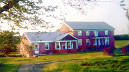 Rainham Builders
 Abt 1817 - 1892 (~ 75 years)