| Notes |
MAKING THE BEST OF ADVERSITY
Thomas Earle Awde (36 Generation) was born in the beautiful Lynn River Valley, July 29, 1903, in the store post office house on Queen Street in Dover Mills as Port Dover was then called.
His father Francis "Duke" Awde and his mother Ellen Awde, nee Wright, moved to Dover Mills in 1900 to work the Colman family farm, of which the store post office house was a part. Previously the family lived in a farm on the corner of Cheapside Road and No. 3 Highway.
Francis Douglas Awde was married before to Elizabeth Snell who died in 1893. They had two daughters Ada Martha and Carrie. Earle started school at seven years of age. A neighbour, Art Blight, took him to school the first day. His teachers were Sadie McQueen, Agnes Exelby, Francis Henry Stringer and lastly Mr. Watson. Earle and Mr. Watson agreed that Earle was not getting along well and that Earle "had learned all he was going to learn there." So he quit school at fifteen in the eighth grade, the same year his mother died.
He went to work in the Chas. Ivey & Co. grist flour mill and lived with his father for a year. Two bachelors alone in one household did not work well. Earle left to live with Carrie, now Mrs. Sam Robinson, on a farm about two miles from Dover. Sam Robinson operated a small dairy and Earle delivered milk in and around Dover for two years until Sam gave up the dairy business. Meanwhile Duke got a housekeeper, a Miss Margaret MacIntosh, and they got along well.
The Lynn Valley was, and still is, a beautiful place to grow up. In his free moments Earle hunted, fished, swam, boated in summer and hunted, skated and went sleighing in winter. He was very familiar especially in and around the area where the Gulf Oil Refinery and Stelco Steel Mill now operate. Earle worked on fishing boats operating out of Port Dover harbour and also in the fish shanties preparing the plentiful whitefish and herring for rail transport to New York City. These were long working days. As long as the fishing was good the fish had to be processed. 1923 saw water and sewer systems started in Port Dover. Earle played a part in it.
Wanderlust struck Earle in 1923 and he joined many others who went by rail - LE&N Railway - to Brantford and thence CNR to Saskatchewan to help in the western wheat harvest. He landed in Tompkins, Saskatchewan in the centre of wheat country. Fifteen dollars bought a one-way rail ticket. It was a good dry autumn, ideal for the harvest. Earle worked for four and a half months, until just before Christmas, operating a steam engine which supplied power to the threshing machine.
Upon returning home he continued to work at the grist flour mill. He stayed at home during the 1924 harvest because he had a foreboding. Sure enough, Duke died in September 1924. Earle now boarded with the Robert Leitch family who had bought the Colman farm where Earle was born. He later boarded with Edmond and Annie Jamieson.
The summer of 1925 saw him and Frank Leitch, a son of Robert Leitch, in Toronto, where they got a job aboard the passenger steamer, Kingston, which plied between Toronto and Prescott, along with its sister side-wheeler, the Cayuga. In those early days, before there were proper serviceable roads and auto or truck transport, before the railroads were fully developed, lake shipping carried practically all mail, package freight, lumber and grain; cheaply and efficiently in the spring, summer and autumn months.
At the beginning of August Earle and Frank went west to Alberta, Frank to Strathmore, Earle to Cheedle and Dalroy. In the spring of 1926 Earle and a friend Clifford Smith signed on with Captain C. O. McDonald on the James B. Foote at Kingston, carrying grain from Fort William to Port Arthur, now Thunder Bay, at the head of the Great Lakes. The ship had to off-load part of its cargo in order to navigate the Welland Canal at Port Colborne. At one time Earle was in the ship’s hold, doing some caulking when the wheat came down the loading spout. He was almost buried alive. He suffered a broken leg. He never rejoined the James B. Foote.
After the leg healed Earle went to work in 1926 in the stone quarry at Milton Porter’s. However, that did not last long as the smell and dust from the fresh rock and blasting powder were too strong. He then worked for Mid Thompson at Erieau packing and shipping fish until January when winter storms curtailed fishing. This was when Earle married Annie Marietta Finch and moved into the old Richard Stevens’ house. He worked for Glen Ryerse who operated a saw mill in Vittoria from 1927-1928. Then he built two barns along with Glen Ryerse and Earl Reid, one for Robert Miller and one for George Reynolds.
Thereafter he helped Ben Ivey build a dance hall in Dover. Charles Ivey lured Earle away with an offer of eighteen dollars a week which was high pay in Dover in 1929. Ben was angry so Earle worked after supper at the dance hall to placate Ben who was anxious to finish the dance hall for the next summer season.
The great depression curtailed much business activity and from April 1931 until August 1951 Earle took his family to the Port Dover Cemetery. Here he looked after the cemetery at $10 monthly but only for the summer months. All burials paid extra and he could live in the house on the cemetery property year round. Norfolk County became a tobacco producer. "Nettie," Earle’s wife, worked in tobacco and the considerable Norfolk apple harvests.
It was the very necessary custom in the country, and even in towns, for each household to be as independent and self-sustaining as possible because there was not any money for extras. Such ecomomies as using white flour sacks, duly bleached, for men’s shirts and bed linen were widely practiced. A hen house provided fresh eggs and the occasional meal. Many had a pig which was fed ground grain supplemented with table scraps and kitchen refuse. Young children made a fresh cow advisable, if not imperative. Often helping a local farmer at the height of seeding or harvest was repaid in kind; grain for poultry feed, straw hay or chopped grain for a pig or cow, or a steer for winter beef.
Earle had a large family of young growing children. The nutritional value of milk was well known. He bought a fresh Holstein cow for $15.00 to fill this need. He fed, as a supplement, chopped mangles, a type of beet. On one occasion the cow choked on a piece of mangle because it caught in her wind pipe. Fearful of losing his investment and a source of sorely needed fresh milk, Earle sought to remove the offending article by inserting his hand into the cow’s throat. She resented this unseemly intrusion and promptly severely clamped her large strong teeth on his protruding thumb. The cow continued to struggle for air. Not to be outdone he inserted a 2" x 4" board on one side of the cow’s mouth to prop her jaws open and tried again. He could not reach the hurtful piece of mangle. The cow continued to gasp for air. Somehow during this unequal contest between beast and man the board became loose. The cow really clamped down on Earle’s thumb. Suffice it to say the cow lost the battle and died from lack of air. Not to suffer complete loss he sought help from a neighbour. They loaded the dead cow and took her to another neighbour who was skilled as a butcher. The family ate beef almost exclusively for some time.
Someone gave Earle a Brownie Box Camera early in his youth. Today we are fortunate that because of Earle’s highlighting the day-to-day happenings of a lifetime we have obituaries, community events, fires, travels, family history, all taken with the trusty Box Camera. There are in all fifty scrap books of memorabilia.
In the autumn and winter while at the cemetery Earle worked as a carpenter doing renovations. He installed over a dozen kitchen cupboards and the cabin carpentry in more than one of Dover’s fishing boats.
It was here during this time that Clarence Douglas, Mary Ellen (died very young), Betty Joanne, Barbara Jean and Robert Earle were raised. In August of 1951 Henry Misener coaxed Earle to become superintendent of the Port Dover Waterworks at a salary of $2500 a year which was considered a good salary at the time. Here he worked for twenty years. Here he retired in 1971 at the age of 68 years.
Earle was a good millwright. Even when he worked elsewhere he was called, in time of emergency to come to the grist mill or to the Culverhouse canning plant to repair equipment. He lived in an era when social security was non-existent. Then, men had to seek whatever employment was available, wherever it was and at the offered wage. The best recommendation a man could have was a reputation for good, competent, honest work. A habit of saving was encouraged, maybe even mandatory. This was an era of great change, of high adventure, of progress through a horse drawn era through the steam age, the turn of the internal combustion engine to the jet age. Tremendous scientific, engineering, dental, medical, surgical, medicinal and educational progress continued to be made during his lifetime. The women folk contributed greatly to the household economy. They helped with much of the harvest work and maintained a large family garden of fruit and vegetables. Much of the fruit and vegetables and beef and pork were canned for use when they were not available. Some families made their own cider, vinegar, butter, cream and cheese. Since there was seldom home delivery, bread and pastry was mostly baked in the home.
|
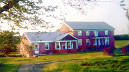 Rainham Builders
 1903 -
  , d. 8 Sep 1924, Port Dover, Ontario