| Notes |
From Hoover Ancestors,
Page 12:
Jacob Hoober was on the 1718 Conestoga, Lancaster County assessment list.
Page 18:
Jacob Hoober was listed among "Dutch Inhabitants" of Conestoga, Lancaster County in 1718.
After Jacob's death his wife Barbara was known as "Widow Hoober"
The following is an excerpt from an Instrument for the sale of property from Martin Kundig and Hans Heer to Hans Boyer. The First Byerland Church would be built on this land in 1748 (still standing at a different location). The land Hans Boyer purchased bordered on "ULRICH HOOBER'S" land and "THE WIDOW HOOBER'S" land.
- Bearing date the Twenty second day of November in the year of our Lord 1717 the quantity of five thousand Acres of Land was granted to be surveyed unto Martin Kundig and Hans Heer among the Surveys then made on Conestogo and Pequea Creeks in the County now called Lancaster. In pursuance of which said Warrant there was Surveyed in part of the quantity therein mentioned on the Tenth day of May Anno 1719 a certain Tract of Land within the said County Beginning at a white Oak by the said Pequea Creek at a corner of John Farrer's Land and extending thence by the same North North East fifteen perches to a Post and South by East thirty six perches to a Post and North North East eighty perches to a Post and North seventy eight degrees East forty perches to a black Oak thence by ULRICH HOOBER'S land South East by East eighty perches to a Hickery tree thence by WIDOW HOOBER'S Land South Sixty perches to a post South Six degrees. East thirty two perches to a Post and South three degrees East two hundred and one perches to a Post thence by vacant Land, West by North Sixty five perches to a White oak and South by East twenty eight perches to a Post by the aforesaid Creek thence up by the same on several Courses two hundred and eighty perches to the place of Beginning containing two hundred and ten Acres and the Allowance of Six Acres on each hundred for Roads and Highways as in and by the Survey thereof remaining in our Surveyor General's Office and from thence certified into our Secretary's Office may appear. And Whereas in and by one Deed poll bearing date the twentieth day of October Anno 1736 for the consideration therein mentioned the said Martin Kundigg and Hans Heer did Bargain and Sell all their Right and claim of and in the Same Tract of Land unto Hans Boyer of the County Aforesaid.
From Hoover Heritage Commemorative Calendar December 2006
ANTIQUE HOOVER CHEST
"Built in Germany, 1688"
According to oral tradition and a penciled inscription, this chest was built by/for the Hoovers in Germany in 1688. The Hoover/Hubers were German-speaking Mennonites from Switzerland who were persecuted for their Anabaptist religious beliefs. In 1688 the armies of Louis XIV of France invaded and destroyed the Palatinate, a German State in which the Swiss Mennonites had sought refuge. The Hubers may have moved further north in 1688 to escape the brief war, or moved from Switzerland into the Palatine later that year to work on reconstruction. Eventually the Mennonites were driven out of the Palatine as well and moved north into Holland, the only religious refuge in Europe. There the various Anabaptist sects were recruited by William Penn's agents to settle his new American colony, Pennsylvania.
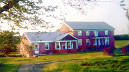
The Patriarch of the Huber/Hoovers in Canada was Jakob Huber (1728-1810) who was born in Lancaster Co., Pennsylvania, son of Hans "Ulrich" Huber. Apparently the chest was built by/for Jakob Huber's ancestors some three decades before the family emigrated from Holland to Pennsylvania in 1717. The chest was donated to Cottonwood Mansion by the family of Hoover descendant Alice Elizabeth "Allie" (Hamilton) Demorest, and it remains there on permanent display.
|
 Rainham Builders
 1680 - 1722 (~ 42 years)